
The insulin blood test is a common test in doctor’s offices. It helps check how well your pancreas and metabolism are working. To understand this test, first, know what insulin does. Insulin is made by the pancreas and helps move glucose into your cells for energy.
This test measures how much insulin is in your blood. When you eat, your blood sugar goes up. The pancreas then makes more insulin to help your cells use glucose. This process happens with every meal.
You might hear this test called different names. Fasting insulin, insulin serum, and total and free insulin are all the same. They help doctors see how well your body handles blood sugar.
Insulin does more than just control blood sugar. It helps your body grow and stay healthy. It’s important for your bones, brain, muscles, and skin. It even helps with memory and keeping the right balance of sodium in your body. Checking your insulin levels can show how well your body is working.
Key Takeaways
- The insulin blood test measures the amount of insulin hormone present in your blood sample.
- Insulin is made by pancreatic beta cells and is essential for moving glucose into cells for energy.
- Serum insulin levels help doctors evaluate metabolic health, pancreatic function, and blood sugar regulation.
- This test may be ordered as fasting insulin, insulin serum, or total and free insulin.
- Insulin affects multiple organs and systems, including the brain, liver, kidneys, bones, and muscles.
- Understanding the insulin blood test meaning can help patients take an active role in managing their health.
What the Insulin Blood Test Measures
An insulin blood test shows how much insulin is in your blood at a certain time. The results are in microunits per milliliter (μIU/mL) or picomoles per liter (pmol/L). It’s important to understand what insulin does and why knowing its levels is key to your health.
Insulin Levels in the Blood
To get a fasting insulin test, you need to not eat for about 12 hours before the test. This helps doctors get a true reading without food effects. Also, stop taking biotin supplements at least 24 hours before the test, as they can affect the results.
| Measurement Unit | Common Use | Typical Fasting Range |
|---|---|---|
| μIU/mL | United States labs | 2.6–24.9 μIU/mL |
| pmol/L | International labs | 18.1–173 pmol/L |
How Insulin is Produced
Beta cells in the pancreas make insulin when blood sugar goes up after eating. The pancreas makes insulin and C-peptide at the same time. Insulin unlocks cells, letting glucose in, which is then turned into energy.
Importance of Measuring Insulin
Even though insulin is vital, a fasting insulin test isn’t usually part of routine bloodwork. Doctors order it when they see signs like unexplained tiredness or weight gain. It can show insulin resistance and chronic diseases early, even before blood sugar levels seem off.
- Detects metabolic dysfunction before glucose tests show problems
- Supports early screening for pre-diabetes risk
- Helps evaluate sustained energy production at the cellular level
Now, let’s look at why doctors might order this test and what symptoms lead to that decision.
Why the Insulin Blood Test is Ordered
Doctors order an insulin blood test for several reasons. The main reason is to find out why a patient has low blood sugar. This test helps figure out if the body is making too much insulin or not using it right.
Knowing why the test is done helps patients understand their results better.
Symptoms and Conditions Leading to Testing
Certain symptoms mean a patient needs an insulin blood test. Symptoms like excessive hunger, sweating, an irregular heartbeat, fatigue, dizziness, and blurred vision are common. Severe cases can lead to fainting or seizures, needing emergency care.
A hyperinsulinemia diagnosis is considered when cells don’t respond to insulin right. The pancreas then makes more insulin. Doctors might test after insulinoma surgery to check for any remaining tumor tissue or if it comes back.
Monitoring Diabetes Management
For those with type 2 diabetes, insulin testing helps decide on treatment. It’s important to know if insulin therapy is needed. For type 1 diabetes patients who got pancreatic islet cell transplants, it checks if the transplant is working.
If the results are not in the normal range, doctors might change medication or dosing.
Pre-Diabetes Risk Assessment
Early detection of pre-diabetes can stop it from turning into type 2 diabetes. The American Diabetes Association suggests screening for adults with certain risk factors:
| Risk Factor | Details |
|---|---|
| Age | Over 45 years old |
| Body Weight | Obesity or BMI above 25 |
| Family History | Parent or sibling with diabetes |
| Ethnicity | African American, American Indian, or Hispanic |
| Metabolic Indicators | High blood pressure, abnormal cholesterol, or waist circumference above guidelines |
“Screening for abnormal glucose metabolism should be considered in adults of any age who are overweight or obese and who have one or more risk factors for diabetes.”
— American Diabetes Association, Standards of Care in Diabetes, 2024
Early detection of insulin imbalances through testing is key. It gives patients a chance to manage their health with lifestyle changes before needing medication.
Normal Reference Range for Insulin Levels
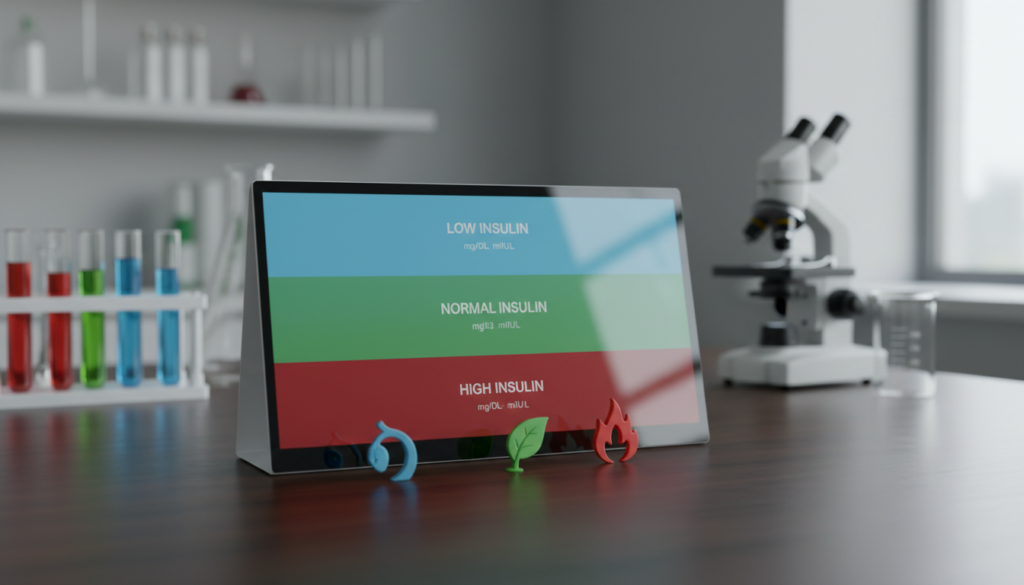
Understanding fasting insulin levels starts with knowing what “normal” looks like. The truth is, no single universally accepted reference range exists. Different labs and medical experts recommend slightly different numbers. This can make having your insulin test results explained feel confusing at first.
Standard Units of Measurement
Insulin in the blood is measured in micro-international units per milliliter (μIU/mL). Quest Diagnostics, one of the largest U.S. lab networks, lists a reference range of 2.55–18.4 μIU/mL. Medscape considers anything under 25 μIU/mL as normal. These numbers reflect the wide gap in clinical standards.
Interpretation of Results
Several well-known physicians advocate for tighter ranges when interpreting fasting insulin levels:
| Source | Recommended Range (μIU/mL) |
|---|---|
| Quest Diagnostics | 2.55–18.4 |
| Dr. Mark Hyman (Cleveland Clinic) | 2–5 |
| Dr. Dom D’Agostino | 2–6 |
| Dr. David Perlmutter | Under 8 |
| Dr. Ben Bikman & Dr. Rob Lustig | Under 10 |
| Medscape | Under 25 |
A study of Korean adults without diabetes found that metabolic syndrome risk increased above 10.57 μIU/mL. A Chinese men’s study reported a median of 5.79 μIU/mL with a range of 1.57–16.32 μIU/mL. Indian research placed the upper limit at 17 μIU/mL.
Variations by Age and Health Status
Your insulin test results explained in full must account for ethnicity, age, and sex. Research shows that post-menopausal Black and Hispanic women tend to have higher fasting insulin levels than White and Asian women. These biological differences matter when doctors assess whether your results signal a problem or fall within an expected range for your demographic group.
What High Insulin Levels May Indicate
When your insulin test results show high levels, it’s important to understand what it means. High insulin, or hyperinsulinemia, means your body is making more insulin than it should. This can be a sign of several health problems that need attention.
Insulin Resistance
High insulin levels with normal or high blood sugar are signs of insulin resistance. In this condition, your cells don’t respond well to insulin. The pancreas then makes even more insulin.
Studies from the Metabolic Syndrome Institute show that insulin resistance affects up to 88% of American adults. That’s about 133 million people. Catching hyperinsulinemia early can help stop type 2 diabetes.
Metabolic Syndrome Associations
High insulin often goes with a group of risk factors called metabolic syndrome. These include:
- High fasting blood glucose
- Abdominal obesity
- Elevated blood pressure
- Low HDL (“good”) cholesterol
- High triglyceride levels
This mix of factors greatly raises the risk of heart disease and stroke. High insulin speeds up the hardening of artery walls, known as atherosclerosis.
Other Possible Conditions
High insulin levels can also mean other health issues. These include:
| Condition | How It Relates to High Insulin |
|---|---|
| Insulinoma | A rare pancreatic tumor that causes excess insulin secretion and episodes of low blood sugar |
| Cushing’s Syndrome | Excess cortisol production that drives insulin levels upward |
| PCOS | Insulin resistance disrupts hormonal balance, causing fertility complications |
| Non-Alcoholic Fatty Liver Disease | Excess insulin drives free fatty acids into the liver, promoting fat buildup |
Recent studies in The Lancet Diabetes & Endocrinology found a link between chronic high insulin and cancer. This includes lung and breast cancer. Getting a hyperinsulinemia diagnosis early can help prevent these serious conditions.
What Low Insulin Levels May Indicate
Low insulin levels mean the pancreas can’t make enough of this key hormone. Without enough insulin, glucose can’t get into cells for energy. It’s important to understand these levels to find and treat the cause early.
Type 1 Diabetes Considerations
Type 1 diabetes often causes low insulin levels. In this disease, the body attacks and destroys the beta cells in the pancreas. This makes it hard for the pancreas to make enough insulin.
Signs of type 1 diabetes include:
- Low insulin and high blood glucose
- Rapid, unexplained weight loss
- Frequent urination and extreme thirst
- Chronic fatigue and blurred vision
About 1.9 million Americans have type 1 diabetes, says the American Diabetes Association. Spotting low insulin early can prevent serious problems like diabetic ketoacidosis.
Hypoglycemia Related Factors
Sometimes, low insulin is linked to low blood sugar instead of high. This can happen if the pituitary gland doesn’t work right. This gland helps control how the pancreas works, leading to low insulin and glucose.
Other Medical Conditions
Many conditions can affect insulin levels:
| Condition | Effect on Insulin Production | Primary Concern |
|---|---|---|
| Chronic Pancreatitis | Inflammation damages beta cells | Progressive loss of pancreatic function |
| Pancreatic Surgery | Removal of insulin-producing tissue | Permanent insulin deficiency |
| Hypopituitarism | Reduced hormonal signaling | Multi-organ hormonal imbalance |
Any low insulin reading needs a full medical check-up. The next section will look at how combining insulin tests with other biomarkers helps doctors diagnose better.
Related Biomarkers in Assessing Insulin Levels
An insulin blood test only shows part of the story. To fully understand insulin levels, we must look at several related biomarkers. These tests help doctors see patterns that a single test might miss.
Glucose Testing
Blood glucose and insulin levels are closely linked. This relationship gives us important clues about the body’s health:
- High insulin + normal glucose — suggests early insulin resistance
- High insulin + low glucose — points toward hypoglycemia
- Low insulin + high glucose — indicates the pancreas isn’t producing enough insulin
Research from InsideTracker shows about 13% of males and 7% of females have fasting glucose above 100 mg/dL. Tools like the HOMA2-IR and Matsuda Index evaluate the insulin-glucose relationship more thoroughly than either metric alone.
C-Peptide Levels
C-peptide is released by the pancreas in equal amounts to insulin. It stays in the bloodstream longer, making it a more reliable marker of true insulin production. This test is valuable for insulin resistance testing because it isn’t affected by injected insulin. It gives doctors a clear view of natural pancreatic function.
HbA1c Correlation
HbA1c measures average blood sugar over two to three months. Studies show that elevated insulin can predict glycemic dysfunction up to 24 years before it appears on standard glucose tests. High insulin often precedes high glucose by as much as 13 years.
Catching insulin imbalances early through testing can change the trajectory of metabolic disease long before glucose levels rise.
| Biomarker | What It Measures | Time Frame Reflected |
|---|---|---|
| Fasting Glucose | Current blood sugar level | Moment of testing |
| C-Peptide | Pancreatic insulin output | Recent hours |
| HbA1c | Average blood sugar | 2–3 months |
| HOMA2-IR Score | Insulin-glucose relationship | Fasting state assessment |
Elevated insulin is linked to increased inflammation markers like hs-CRP and altered liver enzymes such as ALT. Pairing insulin resistance testing with these biomarkers gives clinicians a complete view of metabolic risk.
Factors That Affect Insulin Test Results
Knowing what an insulin test measures is just the start. Many lifestyle and health factors can change your results in ways you might not expect. Understanding these can help you and your doctor get the most accurate results.
Fasting vs. Non-Fasting Conditions
A fasting insulin test needs 8 to 12 hours without food or drink (except water). This makes sure your insulin levels are steady. Eating, and foods high in carbs like grains and fruit, can make insulin levels spike. Without fasting, it’s hard to understand your results.
Impact of Exercise and Nutrition
Your daily activities greatly affect your fasting insulin test results. Here are important things to remember:
- Physical activity: Even short walks can help your body use insulin better. Sitting too much can make it harder.
- Diet quality: Foods that quickly raise blood sugar can lead to insulin resistance over time. Foods high in soluble fiber help keep insulin levels healthy.
- Sleep: Not getting enough sleep, less than 7 to 9 hours, can make insulin resistance worse. This was found in a study in Diabetes Care (2015).
- Body composition: Too much fat around your organs can make insulin resistance worse. Gaining weight can also raise your fasting insulin levels.
Medications Influencing Insulin Levels
Some supplements and drugs can affect your insulin test results. For example, biotin supplements can mess with lab tests. But, chromium and folate might help your body use insulin better.
| Factor | Effect on Insulin Levels | Recommendation |
|---|---|---|
| Biotin supplements | May cause inaccurate readings | Stop 72 hours before testing |
| Chromium supplements | May improve sensitivity | Inform your doctor before testing |
| Corticosteroids | Can raise insulin levels | Discuss timing with your provider |
Always tell your doctor about all your medications and supplements before a fasting insulin test. This helps get the most accurate results for your care plan.
Clinical Context Considerations
Lab report numbers only tell part of the story. A doctor’s interpretation of insulin test results depends on more than just the numbers. A patient’s medical history, other lab results, and daily habits all play a role.
Patient History and Symptoms
Doctors start by looking at a patient’s medical history. They consider family history of diabetes, past glucose issues, and conditions like polycystic ovary syndrome (PCOS). Symptoms like frequent urination and unexplained weight loss can indicate blood sugar problems.
But, some people may not show symptoms even when their insulin levels are off.
Cohesive Testing with Other Diagnostics
Insulin levels make more sense when looked at with other tests. Tests like glucose, C-peptide, and HbA1c give a full picture of metabolism. The CDC says about 20% of diabetes cases in the U.S. are undiagnosed, making these tests key for early detection.
Context of Lifestyle and Demographics
Age, race, and body type affect what’s considered normal for insulin levels. Studies show African Americans, American Indians, and Hispanics are at higher risk for insulin resistance. As people get older, their metabolism changes, raising the risk.
About one in three Americans has prediabetes, and one in ten has type 2 diabetes.
| Demographic Factor | Impact on Insulin Interpretation | Clinical Action |
|---|---|---|
| African American patients | Higher insulin at metabolic syndrome diagnosis | Race-adjusted thresholds considered |
| Age over 45 | Increased resistance likelihood | Routine screening recommended |
| BMI above 30 | Obesity complicates insulin readings | Waist circumference measured alongside labs |
| Hispanic populations | Elevated baseline resistance risk | Earlier and more frequent testing advised |
Knowing these factors helps doctors give accurate diagnoses. This leads to better care for patients.
Limitations of the Insulin Blood Test
No lab test is perfect, and the insulin blood test is no exception. It has its own set of limitations. These can affect the accuracy of the results, making it important to analyze them carefully.

Specificity and Sensitivity Concerns
Sample quality is key to getting accurate results. Hemolysis—the breakdown of red blood cells—can mess up samples. In people with certain autoimmune conditions, their bodies can make antibodies that affect insulin levels.
Insulin, proinsulin, and C-peptide can sometimes get mixed up in tests. A 1996 study by the American Diabetes Association found big differences in results from the same samples. A 2007 study showed results could vary by up to twofold from the same sample at different labs.
Interpretation Challenges
Interpreting insulin levels is tricky because tests aren’t always the same. This makes it hard to compare results. Several things can make it even harder:
- Body mass index and overall weight
- Insulin clearance rates
- Diet, exercise habits, and ethnicity
- No scientific consensus on optimal levels—estimates range from 5 to 25 μIU/mL, a fivefold difference
High insulin levels have been seen as a downstream effect for a long time. This has made it hard to see them as a risk factor on their own. In the U.S., insurance rules can also make it hard for people to get tested.
Recommended Additional Testing
A single fasting insulin value doesn’t tell the whole story. To understand it better, we need to look at other biomarkers like glucose, C-peptide, and HbA1c. Scores like HOMA-IR give a more detailed look at metabolism than just one number.
References
This article uses research from trusted sources. It talks about serum insulin levels and how to diagnose hyperinsulinemia. It also covers metabolic health.
Medical Journals
The American Diabetes Association shares important info on insulin and blood sugar. StatPearls Publishing has clinical reviews on insulinoma and endocrine issues. The National Institute of Diabetes and Digestive and Kidney Diseases offers detailed info on insulin resistance and prediabetes.
Johns Hopkins Medicine and Mayo Clinic have detailed guides on diabetes diagnosis and treatment. Medscape helps doctors understand hyperinsulinemia diagnosis and insulin-related findings.
Clinical Laboratory Guidelines
Brunner and Suddarth’s Handbook of Laboratory and Diagnostic Tests explains insulin testing in clinics. Mayo Clinic Laboratories and Quest Diagnostics have test directories with fasting insulin assay ranges. The University of Rochester Medical Center has a health encyclopedia on insulin blood tests.
Testing.com and the Australasian Association for Clinical Biochemistry through Pathology Tests Explained explain insulin test results. The Merck Manual is a key resource for diabetes and blood sugar metabolism.