The HOMA-IR index is a key test in clinics across the U.S. It helps doctors check how well your body uses insulin. This simple test gives a quick look at your metabolic health.
In 1985, David Matthews and Robert Turner from the University of Oxford created the HOMA-IR. It’s a formula that uses fasting insulin and glucose levels. This makes it easy to check for insulin resistance without expensive tests.
Before the HOMA-IR, doctors used a complex test for insulin resistance. This new test made it easier to check for metabolic problems. All you need is a fasting blood draw.
Insulin resistance is common, affecting about 25% of non-diabetic adults in the U.S. This number goes up to over 60% for those who are overweight. Early detection with this test helps prevent serious health issues.
Key Takeaways
- The HOMA-IR calculation uses fasting insulin and fasting glucose values to estimate insulin resistance with a simple blood test.
- Matthews and Turner introduced this homeostatic model assessment in 1985 as a practical alternative to the clamp test.
- The insulin resistance index can detect metabolic issues years before symptoms appear.
- Roughly 25% of non-diabetic U.S. adults have significant insulin resistance, rising above 60% in overweight individuals.
- HOMA-IR supports early metabolic syndrome assessment, giving clinicians a tool for timely intervention.
- Only a fasting blood sample is needed, making this test accessible in virtually any clinical setting.
What the HOMA-IR Test Measures
The HOMA-IR test is a simple yet powerful tool for measuring insulin sensitivity. It looks at two blood values taken after fasting for 8 to 10 hours. Doctors use these values to see how well your cells use insulin, the hormone that unlocks cells for glucose.
Insulin Resistance Assessment
An insulin resistance calculator uses a simple formula: fasting insulin (μU/mL) × fasting glucose (mg/dL) ÷ 405. This formula shows how hard your pancreas works to keep blood sugar stable. If your cells don’t respond well to insulin, your pancreas has to work harder. The HOMA-IR score shows this imbalance with a single number.
Role of Fasting Glucose Levels
A fasting glucose test is key to the HOMA-IR equation. It’s taken after fasting for 8 to 10 hours. This test gives a baseline glucose reading, free from recent meals. High fasting glucose levels can mean your body has trouble regulating sugar.
Importance of Fasting Insulin Levels
Fasting insulin levels show how much insulin your pancreas releases at rest. High levels mean your body needs more insulin to keep blood sugar normal. This is an early sign of insulin resistance, often showing up years before glucose levels rise.
| Component | What It Measures | Normal Range |
|---|---|---|
| Fasting Glucose | Blood sugar after 8–10 hours without food | 70–99 mg/dL |
| Fasting Insulin | Insulin output at rest | 2–25 μU/mL |
| HOMA-IR Score | Degree of insulin resistance | Less than 1.0 (optimal) |
Knowing about these blood markers and how they work is key. It helps us understand why doctors order the HOMA-IR test.
Why HOMA-IR is Ordered
Doctors order the HOMA-IR insulin resistance test early, before diabetes symptoms appear. This blood test serves as an early warning. It catches metabolic problems early, when lifestyle changes can help.
Certain groups benefit most from this screening. These include people with a high BMI, those with polycystic ovary syndrome (PCOS), and those with a family history of diabetes.
Evaluation of Insulin Sensitivity
The HOMA-IR test shows how well your cells use insulin. If sensitivity falls, blood sugar levels rise. This process is silent and can go unnoticed for years.
Those with a BMI over 30, PCOS, or a family history of diabetes are at high risk. They should get this metabolic health screening.
“Blood sugar improvements appear within 14 days” after starting targeted treatment — a sign that early detection through proper screening leads to faster results.
Monitoring Metabolic Conditions
After identifying risk factors, regular check-ups track important biomarkers. These include fasting glucose and A1C levels. Research on prediabetes detection programs shows promising results.
Participants saw a 12% drop in fasting glucose and A1C levels fall from 7.1% to 5.9% in six months. These numbers show the importance of ongoing monitoring.
Assessing Risk for Type 2 Diabetes
A diabetes risk calculator uses age, weight, and lab results. The HOMA-IR score adds to this by measuring insulin resistance directly. Catching the shift from resistance to prediabetes is key.
Over 76% of users in structured programs achieved their target weight and A1C levels at the same time.
| Risk Factor | Why HOMA-IR Helps | Typical Patient Profile |
|---|---|---|
| Abdominal Obesity | Quantifies insulin resistance linked to visceral fat | BMI > 30 kg/m² |
| Family History of Diabetes | Detects early metabolic shifts before symptoms | First-degree relative with Type 2 diabetes |
| PCOS | Identifies hormonal-metabolic overlap | Women of reproductive age |
| Dyslipidemia | Connects lipid imbalance to insulin function | Elevated triglycerides, low HDL |
Normal Reference Range for HOMA-IR
Knowing where your score falls is key to understanding HOMA-IR. The HOMA-IR formula uses fasting insulin and glucose to give a single number. This number shows how well your body uses insulin. But what’s “normal” can vary based on several factors.
Units of Measurement
The HOMA-IR formula is: (fasting insulin in μU/mL × fasting glucose in mmol/L) ÷ 22.5. Labs might use mg/dL for glucose, changing the divisor to 405. Your report might list results under “Glucose Metabolism” or “Insulin Resistance Assessment.” Scores outside the normal range are often marked with asterisks or arrows.
For example, a fasting insulin of 10 μU/mL and a fasting glucose of 5 mmol/L give a HOMA-IR score of about 2.2.
Typical HOMA-IR Values
Insulin resistance values have different meanings for doctors. The table below explains what each range means:
| HOMA-IR Score | Interpretation | Clinical Significance |
|---|---|---|
| Below 1.0 | Optimal insulin sensitivity | Low metabolic risk |
| 1.0 – 1.9 | Early or mild resistance | Lifestyle changes recommended |
| 2.0 – 2.9 | Moderate resistance | Closer monitoring needed |
| 3.0 or higher | Significant resistance | Medical intervention often warranted |
“A HOMA-IR threshold of 2.5 is widely used in clinical practice to identify insulin resistance, though cut-off points may shift based on population demographics.” — Journal of Clinical Endocrinology & Metabolism
Reference ranges can differ between labs. Age, sex, and ethnicity affect what’s considered normal for you. Your doctor will look at your HOMA-IR score in the context of your overall health. This is important when considering risk factors.
Implications of High HOMA-IR Levels
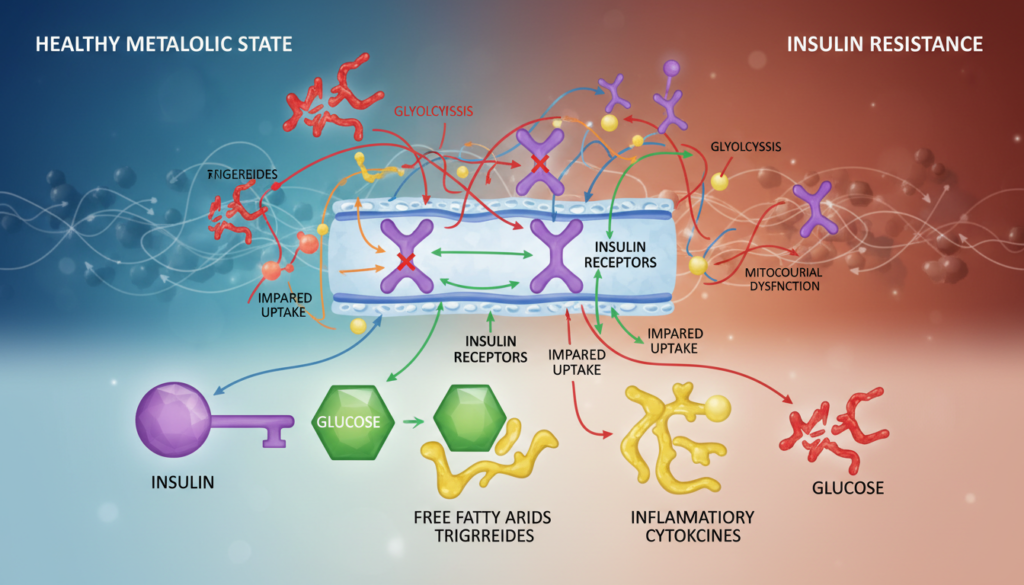
High HOMA-IR scores mean your body is not using insulin well. This can harm almost every part of your body. Your pancreas works harder to make more insulin, but it can get tired and fail.
Potential Indicators of Insulin Resistance
High HOMA-IR scores often come with other health problems. These include:
- Non-alcoholic fatty liver disease (NAFLD) caused by fat buildup in the liver
- Polycystic ovary syndrome (PCOS) in women, disrupting hormones and fertility
- Acanthosis nigricans — darkened, velvety skin patches on the neck or armpits
These signs show your body is not using insulin right. If not treated, they can lead to type 2 diabetes.
Association with Metabolic Syndrome
Metabolic syndrome is a group of health issues. The International Diabetes Federation says it includes:
| Component | Threshold (Men) | Threshold (Women) |
|---|---|---|
| Central Obesity (Waist) | >90 cm (South/East Asian) | >80 cm |
| Blood Pressure | >130/85 mmHg | |
| Triglycerides | >150 mg/dL | |
| HDL Cholesterol | <40 mg/dL | <50 mg/dL |
| Fasting Glucose | >100 mg/dL | |
Having three or more of these signs and a high HOMA-IR score means you might have metabolic syndrome.
Link to Cardiovascular Diseases
High HOMA-IR scores increase your risk of heart disease. They can lead to high blood pressure and bad cholesterol levels. These problems can cause plaque to build up in your arteries.
The American Heart Association notes that insulin resistance is an independent predictor of cardiovascular events, even in people who have not yet developed diabetes.
Spotting these heart disease risks early can help prevent serious problems.
Implications of Low HOMA-IR Levels
A low HOMA-IR score is a good sign. It shows your body handles blood sugar well. Scores below 1.0 mean your insulin sensitivity is top-notch. Knowing what these values mean is important.
Potential Indicators of Improved Insulin Sensitivity
When your HOMA-IR is between 0.5 and 1.0, your insulin is working great. Your cells take in glucose easily. This is a sign of better metabolic health.
People with low HOMA-IR scores are at lower risk for type 2 diabetes and heart disease. A study in the Journal of Clinical Endocrinology & Metabolism shows these scores help keep your metabolism healthy over time.
- Efficient glucose uptake by muscle and fat cells
- Healthy fasting insulin and blood sugar levels
- Lower inflammation and reduced oxidative stress
- Decreased risk of chronic metabolic diseases
Possible Associations with Other Conditions
In rare cases, very low HOMA-IR values might mean a problem. These could be signs of malnutrition or issues with the pancreas. A doctor should look at these results with other health markers.
| HOMA-IR Range | Interpretation | Clinical Significance |
|---|---|---|
| Below 0.5 | Unusually low | May suggest malnutrition or pancreatic dysfunction |
| 0.5 – 1.0 | Optimal insulin sensitivity | Excellent glucose regulation and improved metabolic health |
| 1.0 – 1.9 | Normal range | Adequate insulin function with low disease risk |
Living a healthy lifestyle, like exercising and eating well, keeps HOMA-IR scores good. Next, we’ll look at how HOMA-IR works with other health tests for a complete picture of your health.
Related Biomarkers
HOMA-IR isn’t alone in assessing your health. Doctors often use other markers to get a full view of your metabolic health. These markers help show how your body handles sugar and fat.
Blood Glucose Levels
Checking blood glucose levels is key to understanding your metabolism. Normal fasting glucose is between 70–99 mg/dL. An optimal range is 70–85 mg/dL. But, levels over 100 mg/dL indicate impaired fasting glucose, a sign of insulin resistance.
The triglyceride-glucose (TyG) index is another important measure. It’s calculated as Ln(fasting triglycerides × fasting glucose)/2. Studies show a strong link between HOMA-IR and TyG index, with r values of 0.605–0.65.
HbA1c
HbA1c testing shows your blood sugar control over two to three months. A value below 5.7% is normal. Between 5.7% and 6.4% means you have prediabetes. This test is vital because it catches changes that a single reading might miss.
Lipid Profiles
Understanding lipid panels is also important. High triglycerides and low HDL cholesterol are signs of insulin resistance. Liver enzymes like SGOT, SGPT, and ALP can also indicate metabolic issues.
| Biomarker | Normal Range | Insulin Resistance Flag |
|---|---|---|
| Fasting Glucose | 70–99 mg/dL | ≥100 mg/dL |
| HbA1c | Below 5.7% | 5.7%–6.4% |
| Triglycerides | Below 150 mg/dL | ≥150 mg/dL |
| HDL Cholesterol | ≥40 mg/dL (men), ≥50 mg/dL (women) | Below these thresholds |
| LDL Cholesterol | Below 100 mg/dL | ≥130 mg/dL |
Monitoring these markers with HOMA-IR helps doctors catch metabolic problems early. It’s also key to know how diet and exercise impact these results, as we’ll see next.
Factors That Affect HOMA-IR Results
Your HOMA-IR score can change. Many factors can affect it. What you eat, how active you are, and your health all matter. Knowing these helps you understand your results better.
Impact of Diet and Nutrition
What you eat greatly affects your insulin sensitivity. Foods high in refined carbs and saturated fats can raise your HOMA-IR. But, a diet rich in veggies, lean proteins, and healthy fats like olive oil can help your insulin work better.
Try to eat 25 to 30 grams of fiber daily. Fiber helps slow down sugar absorption and keeps blood sugar levels stable. Good sources include whole grains, legumes, and leafy greens.
Influence of Physical Activity
Exercise has a big impact on your HOMA-IR score. People who don’t move much tend to have higher scores. Exercise helps your muscles use glucose better, which means your body needs less insulin.
- The American Diabetes Association suggests 150 minutes per week of moderate exercise.
- Even short walks of 10 minutes after meals can help beginners.
- Resistance training builds muscle, which helps store more glucose.
Variability Due to Other Health Conditions
Many health issues and medicines can also affect your HOMA-IR score:
| Factor | Effect on HOMA-IR |
|---|---|
| Visceral obesity | Increases insulin resistance |
| Chronic stress (elevated cortisol) | Raises fasting glucose and insulin |
| Poor sleep quality | Impairs glucose metabolism |
| Corticosteroids and beta-blockers | Increase resistance |
| Metformin use | Improves sensitivity |
Imbalances in your gut microbiome can also affect insulin processing. Talking to your doctor about all your medications and health conditions is important. This is discussed further in the next section on clinical context.
Clinical Context Considerations
HOMA-IR results are never just a number. They tell part of the story. Doctors must consider many factors to understand insulin resistance. Age, sex, ethnicity, health conditions, and family history all matter.
Patient Demographics
Age and sex are key when looking at HOMA-IR scores. Older adults tend to have higher scores. Premenopausal women are often more insulin sensitive than men, but this changes after menopause.
Ethnicity also plays a role. For example, Asian Indians face higher insulin resistance risk at lower BMIs. This means a “normal” HOMA-IR score can mean different things for different groups.
Coexisting Health Issues
Medical conditions change how we interpret HOMA-IR scores. Hypertension is more common in those with metabolic syndrome. This pattern holds true for many conditions:
| Condition | With Metabolic Syndrome | Without Metabolic Syndrome |
|---|---|---|
| Hypertension | 42.1% | 1.8% |
| Diabetes | 35.8% | 0.9% |
| Median HOMA-IR (Overweight/Obese) | 3.4 | 1.7 |
Medications, substance use, and chemicals can also affect results.
History and Family Background
A family history of type 2 diabetes increases risk. Doctors should ask about first-degree relatives with diabetes or heart disease. This helps understand if high HOMA-IR scores are genetic or not.
Limitations of the HOMA-IR Test
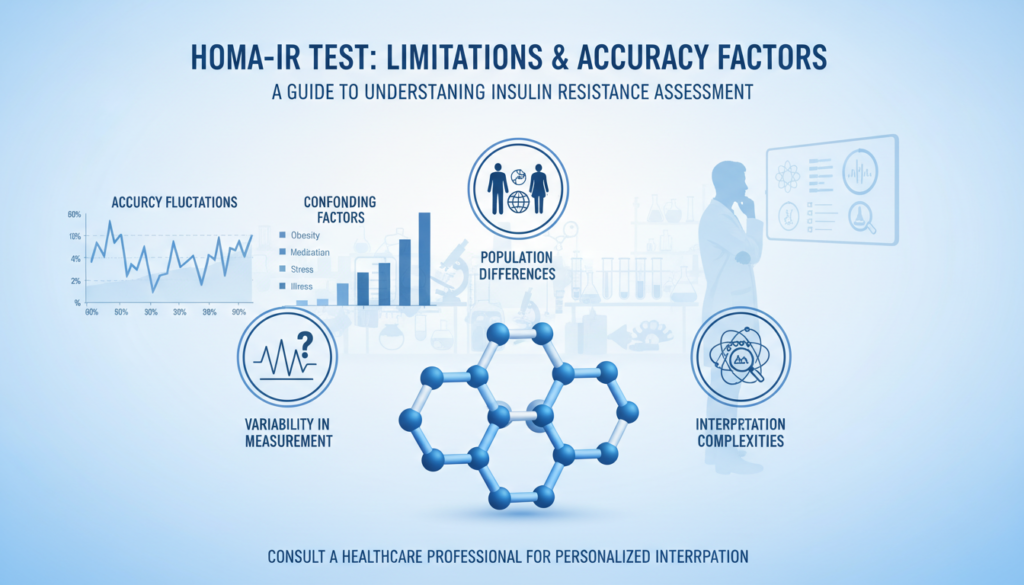
HOMA-IR is a common tool for checking insulin resistance. But, it’s not perfect. Knowing its limits helps everyone understand what it can and can’t show. There are several factors to consider when using this test.
Variability in Population Studies
One big problem is the lack of a universal cut-off value. The right number can vary by ethnicity and study type. This means what’s normal in one group might show insulin resistance in another. HOMA-IR is not as good for big studies as simpler tests like the TyG index.
| Factor | Impact on HOMA-IR Results |
|---|---|
| Ethnicity | Cut-off values shift between 2.0 and 2.9 |
| Fasting Duration | Requires strict 8–10 hour fast; deviations skew results |
| Insulin Assay Method | Different lab techniques produce varying insulin readings |
| Acute Illness or Stress | Temporarily elevates glucose and insulin levels |
Potential for Misinterpretation
There are challenges in how we interpret HOMA-IR results. Stress, infections, or fasting mistakes can make values look wrong. The test cannot distinguish between different types of insulin resistance. Also, it only shows one snapshot of insulin levels, not the whole picture.
Influence of Testing Conditions
Getting accurate results depends on strict testing rules. Blood must be taken after a long fast. Different ways to measure insulin in labs can lead to different results. HOMA-IR is not as accurate as the most reliable research methods.
A single HOMA-IR value should always be interpreted alongside a patient’s full clinical picture, not as a standalone diagnosis.
Future Directions in Insulin Resistance Research
The study of insulin resistance is moving quickly. Scientists are looking into new tools and strategies to find and treat this condition. These changes could change how doctors diagnose and treat it in the future.
Emerging Biomarkers
Researchers are focusing on adipokines, hormones from fat, as new signs of insulin resistance. These hormones change before blood sugar levels do. The TyG index, which uses triglyceride and glucose levels, is also being studied as a simple test.
Scientists are also looking into how stressed fat cells might contribute to insulin resistance. This could help us understand the condition better.
Longitudinal Studies
Big studies are following how insulin resistance turns into type 2 diabetes over time. These studies show that insulin resistance affects a lot of adults worldwide. They are using genetics to predict who might get serious metabolic diseases.
These long-term studies help us know who needs help early and when to act.
Impact of Lifestyle Interventions
Studies are testing ways to improve insulin sensitivity by targeting different metabolic pathways. The Mediterranean diet has been shown to help. Strength training also improves how well the body uses glucose.
Research on gut bacteria shows that eating more fiber can help control blood sugar. Stress-reduction practices like meditation are also being studied. These findings offer hope for preventing and treating insulin resistance early.