The HbA1c test is a key test in healthcare. It shows how well your body handles blood sugar over time. It’s a simple blood test that checks how much glucose is attached to your red blood cells.
Red blood cells live for about three months before they’re replaced. So, this test gives a good picture of your blood sugar levels during that time.
Doctors also call this test glycated hemoglobin or glycosylated hemoglobin. It doesn’t matter what it’s called. The goal is the same. It helps find diabetes, prediabetes, and check if treatments are working.
Knowing your HbA1c levels is key for tracking your health. The Centers for Disease Control and Prevention (CDC) says everyone over 45 should get tested. Those under 45 with risk factors like obesity or a family history of diabetes should also get tested.
A healthcare professional takes a small blood sample. You’ll get the results in a day or two. This test shows your long-term blood sugar control, unlike a single fasting glucose test.
It’s not affected by what you ate the night before. This makes it a better tool for making important health decisions.
Key Takeaways
- The HbA1c test measures the percentage of glucose-coated hemoglobin in red blood cells, reflecting a 2–3 month average of blood sugar.
- The CDC recommends this screening for adults over 45 and younger adults with diabetes risk factors.
- Understanding the HbA1c normal range helps detect diabetes and prediabetes early.
- The test requires a standard venous blood draw performed by a healthcare professional.
- Normal HbA1c levels offer a more stable and complete view of glucose control than a single-day blood sugar reading.
- Results from the HbA1c test directly influence treatment plans, dietary guidance, and long-term health strategies.
What the HbA1c Test Measures
The HbA1c test shows how your body has handled blood sugar over two to three months. It’s different from a finger-prick test, which only shows a moment in time. This lab test gives a detailed look at your glucose patterns over time.
Understanding HbA1c results starts with knowing what happens in your bloodstream. It’s about the molecules and how they interact.
Description of Glycated Hemoglobin
Hemoglobin is a protein in red blood cells that carries oxygen. When glucose is in the bloodstream, it naturally attaches to hemoglobin. This creates glycated hemoglobin, or HbA1c.
Glucose stays attached to hemoglobin for 120 days. The more sugar in your blood, the more hemoglobin gets glycated. The test shows this as a percentage, showing how much sugar-coated hemoglobin is present.
| Testing Method | What It Shows | Time Frame |
|---|---|---|
| HbA1c Test | Average blood glucose level | 2–3 months |
| Finger-Prick Glucose Test | Current blood sugar reading | Single moment |
| Continuous Glucose Monitor | Real-time glucose trends | Days to weeks |
Importance of Blood Glucose Monitoring
Keeping blood sugar in the optimal HbA1c range is key to avoiding diabetes complications. The American Diabetes Association says high glucose levels can harm blood vessels, nerves, and organs over time.
The HbA1c test gives a fuller picture than daily monitoring. A single blood draw, usually through venipuncture in under five minutes, offers insights for treatment. Knowing your optimal HbA1c range helps set realistic health goals with your care team.
Why the HbA1c Test is Ordered
Doctors order the HbA1c test for two main reasons. They use it to check if someone might have diabetes and to see if treatment is working. Knowing what a healthy HbA1c level is helps both patients and doctors make better care plans. The CDC says all adults over 45 should get tested, with more tests needed based on risk.
Assessing Diabetes Management
For those with diabetes, checking HbA1c levels is very important. Doctors usually test this at least twice a year. If treatment changes or blood sugar control gets worse, they might test more often, like every three months.
Some symptoms might make a doctor want to test for diabetes. These include:
- Excessive thirst and frequent urination
- Unexplained weight loss or extreme hunger
- Blurred vision
- Numbness or tingling in hands and feet
- Fatigue, dry skin, and slow-healing sores
Evaluating Risk for Diabetes
Screening is also key for those who haven’t been diagnosed. Some groups are at higher risk for Type 2 diabetes. Knowing what a healthy HbA1c level is can help catch prediabetes early.
| Risk Factor | Details |
|---|---|
| Body weight | Being overweight or obese (BMI ≥ 25) |
| Family history | Parent or sibling with Type 2 diabetes |
| Ethnicity | African American, Hispanic/Latino, American Indian, Asian American, Pacific Islander |
| Physical activity | Exercising fewer than three times per week |
| Medical history | High blood pressure, high cholesterol, heart disease, or gestational diabetes |
Early screening and accurate HbA1c test results help prevent or delay Type 2 diabetes. This is done through lifestyle changes and medical treatment.
Normal Reference Range for HbA1c
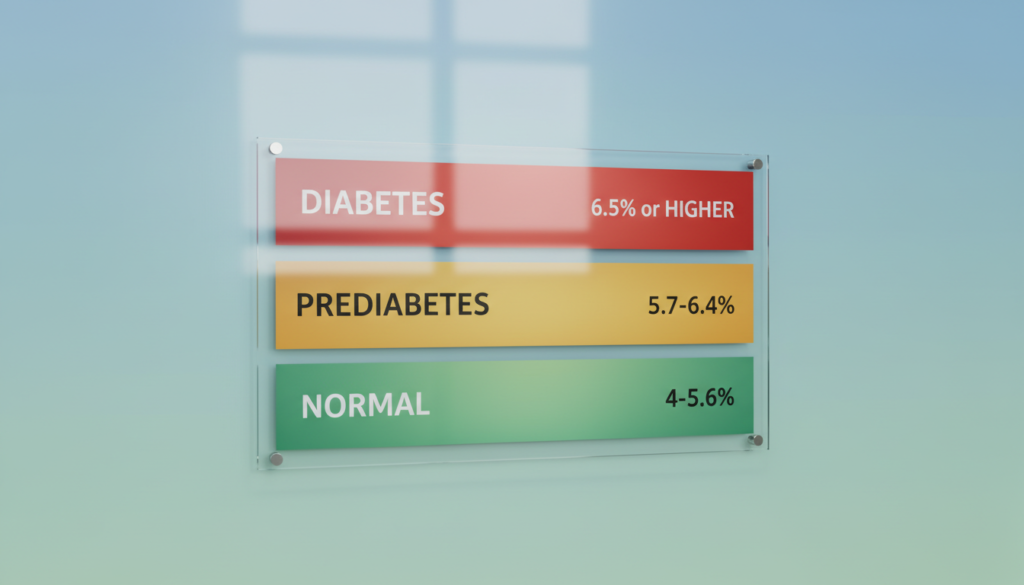
Knowing your HbA1c values is key to understanding your health. A normal reading is under 5.7% (39 mmol/mol). If your reading is between 5.7% and 6.4% (39–47 mmol/mol), you might have prediabetes. A reading of 6.5% (48 mmol/mol) or higher means you have diabetes.
For those with diabetes, the goal is usually under 7% for most adults, as the American Diabetes Association (ADA) suggests.
Units of Measurement
HbA1c is measured in two ways: as a percentage and in mmol/mol (millimoles per mole). The mmol/mol system is the international standard, adopted in 2009. Both units are found on lab reports in the U.S.
| Category | Percentage (%) | mmol/mol |
|---|---|---|
| Normal | Below 5.7% | Below 39 |
| Prediabetes | 5.7%–6.4% | 39–47 |
| Diabetes | 6.5% or higher | 48 or above |
Age and Population Variability
Age affects HbA1c values. Young adults (20–39) average about 6% (42.1 mmol/mol). Adults 40–59 average 6.1% (43.2 mmol/mol). Those over 60 average closer to 6.5% (47.5 mmol/mol).
Older adults have different HbA1c targets based on their health:
- Healthy seniors (65+): The ADA suggests aiming for below 7.5%.
- Intermediate health: A goal below 8.0% is suitable.
- Poor health or frailty: The International Diabetes Federation allows up to 8.5%, for those over 70 with dementia.
The American Geriatrics Society recommends a range of 7.0%–7.5% for healthy older adults. For those in poor health, a range of 8.0%–9.0% is suggested to avoid dangerous low blood sugar episodes.
These adjusted targets show why a single number doesn’t fit everyone. Your doctor will consider your age, health, and treatment goals to set your personal target.
What High HbA1c Levels May Indicate
High HbA1c levels mean your blood sugar has been too high for two to three months. An HbA1c of 6.5% or higher might mean you have diabetes. Doctors will often ask for a second test or a fasting blood glucose check to confirm.
Diabetes Diagnosis
The HbA1c test is key for diagnosing Type 2 diabetes. A reading of 6.5% or higher on two tests usually means you have it. For Type 1 diabetes, other tests are used because it starts quickly. But HbA1c is important for tracking it.
High HbA1c levels mean doctors need to act. They might start new meds, change doses, or suggest lifestyle changes. For Type 2 diabetes remission, success is getting an HbA1c of 6.5% or less without meds.
Other Related Conditions
High HbA1c levels can lead to serious problems beyond diabetes. Even slightly high readings can raise health risks over time.
| Complication | Affected Area | Risk Increase at HbA1c Above 7% |
|---|---|---|
| Cardiovascular disease | Heart and blood vessels | 2–4 times higher |
| Diabetic nephropathy | Kidneys | Up to 3 times higher |
| Peripheral neuropathy | Nerves in hands and feet | Up to 2 times higher |
| Diabetic retinopathy | Eyes | 2–3 times higher |
| Foot ulcers and infections | Lower extremities | Up to 2.5 times higher |
Keeping your HbA1c levels normal is key to avoiding these risks. The American Diabetes Association says most adults with diabetes should aim for an HbA1c below 7% to lower complications.
What Low HbA1c Levels May Indicate
A low HbA1c result often looks like a sign of great blood sugar control. But numbers that dip too low can signal real danger. Understanding what is a healthy HbA1c level means recognizing that both high and low extremes carry risks. Doctors pay close attention when values fall well below the optimal HbA1c range, specially in certain patient groups.
Possible Hypoglycemia Concerns
An unusually low HbA1c may point to frequent episodes of hypoglycemia — dangerously low blood sugar. This is a serious concern for elderly patients. According to the American Diabetes Association, severe hypoglycemia in older adults can trigger:
- Seizures and loss of consciousness
- Mental status changes and confusion
- Cardiac arrhythmias and heart problems
- Falls resulting in bone fractures
- Life-threatening complications
Research published in Diabetes Care confirms that adults over 65 face a much greater risk of hypoglycemia than younger patients when HbA1c is pushed below 7%. Strict control isn’t always the safest path.
Other Considerations
Medical teams sometimes intentionally raise target HbA1c levels for specific patients. The optimal HbA1c range shifts based on individual health profiles. For people living with cognitive impairment or dementia, following complex medication schedules becomes difficult. The risk of a hypoglycemic episode may outweigh the benefits of tight glucose management.
| Patient Profile | Recommended HbA1c Target | Primary Concern |
|---|---|---|
| Healthy younger adults | Below 7% | Long-term complication prevention |
| Older adults with few comorbidities | 7%–7.5% | Balancing control and safety |
| Elderly with cognitive impairment | 7.5%–8.5% | Hypoglycemia avoidance |
Knowing what is a healthy HbA1c level requires looking beyond the number itself. Conditions like hemolytic anemia or chronic blood loss can artificially lower results, which connects to factors discussed in the next section on related biomarkers.
Related Biomarkers to HbA1c
Understanding HbA1c results is better when you look at other glucose biomarkers. The HbA1c test shows your blood sugar average over three months. But, it doesn’t tell the whole story. Other tests help doctors get a full picture of your blood sugar health.
Fasting Plasma Glucose
A fasting plasma glucose (FPG) test checks your blood sugar after not eating for at least eight hours. It’s different from HbA1c because it shows your glucose at one moment. This makes it great for quick checks and diagnosis.
| Glucose Test | Normal | Prediabetes | Diabetes |
|---|---|---|---|
| Fasting Plasma Glucose | Below 100 mg/dL | 100–125 mg/dL | 126 mg/dL or higher |
| HbA1c | Below 5.7% | 5.7%–6.4% | 6.5% or higher |
Knowing your normal glucose levels after eating is important. Your post-meal glucose should be under 140 mg/dL. Things like what you eat, how active you are, and how well your body uses insulin affect these levels.
Oral Glucose Tolerance Test
The Oral Glucose Tolerance Test (OGTT) checks how well you handle a 75-gram glucose solution. Blood samples are taken before and two hours after drinking it. This test is very useful for diagnosing gestational diabetes, where HbA1c alone isn’t enough.
Doctors might use these methods together when results are close or don’t match:
- Finger-prick self-monitoring for daily readings
- Continuous glucose monitors (CGMs) for 24-hour tracking
- OGTT for finding glucose issues missed by other tests
Using these biomarkers with HbA1c helps doctors make accurate diagnoses and create treatment plans. This detailed approach is essential before looking at factors that might affect HbA1c accuracy.
Factors That Affect HbA1c Results
Many medical conditions and lab-related issues can change HbA1c results. It’s important to know these factors to understand HbA1c values correctly. Doctors look at these factors carefully before making a diagnosis or setting a target HbA1c range for a patient.
Hemoglobin Variants
Genetic hemoglobin variants, like those in sickle cell disease and thalassemia, affect how long red blood cells last. The HbA1c test measures glucose over a red blood cell’s life (about 120 days). So, a shorter life can make readings seem lower than they are.
Other conditions can also change results, including:
- Hemolytic anemia — destroys red blood cells early, lowering HbA1c despite high blood sugar
- Iron deficiency anemia — may raise HbA1c values falsely
- Vitamin B12 or folate deficiency — affects red blood cell production
- Kidney or liver disease — changes how hemoglobin is turned over
- Pregnancy — changes red blood cell dynamics
- Recent blood transfusions — dilutes the HbA1c percentage
Some medications, like opioids and certain HIV drugs, can also impact readings. In such cases, doctors might use fasting glucose or continuous glucose monitoring instead of just HbA1c.
Laboratory Procedures
The method a lab uses to test matters. Results can differ based on whether a facility uses immunoassay, ion-exchange chromatography, or boronate affinity techniques. The National Glycohemoglobin Standardization Program (NGSP) certifies labs to reduce these differences, but small variations can remain.
| Lab Method | Interference Risk | Best Suited For |
|---|---|---|
| Ion-Exchange Chromatography | Affected by hemoglobin variants | Patients without hemoglobinopathies |
| Boronate Affinity | Low interference from variants | Patients with sickle cell trait or thalassemia |
| Immunoassay | Variable by reagent manufacturer | Routine screening in general populations |
Clinicians consider both biological and analytical factors before relying on any single HbA1c result to guide treatment decisions.
Clinical Context Considerations
Understanding HbA1c results is not simple. What’s normal for one person might not be right for another. Doctors look at many factors to set goals for each patient.
Individual Patient Factors
A patient’s age is key in setting targets. The American Diabetes Association (ADA) suggests slightly higher HbA1c goals for older adults. This helps avoid dangerous low blood sugar episodes. Younger, healthier patients aim for closer to normal HbA1c levels.
Pregnancy changes the monitoring game. HbA1c is less reliable due to changes in red blood cells. So, daily glucose checks are often used instead.
Other conditions also play a role in setting targets. For example:
- Polycystic ovarian syndrome (PCOS) increases diabetes risk
- Non-alcoholic fatty liver disease affects glucose metabolism
- Chronic kidney disease changes hemoglobin lifespan
- Depression or chronic stress can worsen blood sugar control
Life expectancy and daily self-care abilities also shape goals. These factors help set realistic, achievable targets.
Recent Clinical Interventions
New medications, like corticosteroids, can raise blood glucose. This can push HbA1c results outside the normal range. Recent illness or surgery also causes short-term spikes.
When treatment plans change, healthcare teams wait at least three months before retesting. This allows HbA1c to accurately show the effects of changes. They prefer gradual reductions toward normal HbA1c levels. Sudden drops can be risky.
Limitations of the HbA1c Test
The HbA1c test is very useful, but it has its limits. Knowing when it doesn’t work is key. Some health issues can make the results unreliable or misleading.

Situations Where HbA1c May Be Misleading
The HbA1c test shows a three-month average. It cannot catch daily blood sugar changes or dangerous lows. A person might have big highs and lows but show a normal HbA1c level. This hides a serious issue behind a “normal” number.
Some health problems can make the test less accurate:
- Iron-deficiency anemia or other red blood cell disorders
- Hemoglobin variants such as sickle cell trait
- Chronic kidney failure or liver disease
- Recent blood transfusions or significant blood loss
The test is not used for diagnosing gestational diabetes or the start of Type 1 diabetes. These conditions happen too fast for a three-month average. Older people might have higher HbA1c levels, even if their blood sugar is well-controlled, as the American Diabetes Association found.
Comparison with Other Diagnostics
Other tests can fill in where HbA1c is lacking. Here’s a comparison:
| Diagnostic Method | What It Measures | Best Use Case |
|---|---|---|
| HbA1c | 3-month glucose average | Long-term diabetes management |
| Finger-Prick Testing | Real-time blood glucose | Immediate medication adjustments |
| Continuous Glucose Monitor (CGM) | 24/7 glucose patterns | Detecting highs, lows, and trends |
CGM devices show detailed patterns that HbA1c can’t. Finger-prick tests give quick readings for fast decisions. Knowing about these tools helps patients and doctors understand metabolic health better.
Conclusion on HbA1c Significance
The HbA1c test is a key tool in diabetes care. It shows blood sugar control over two to three months. For the 100 million U.S. adults with diabetes or prediabetes, knowing a healthy HbA1c level is vital for managing health.
Summary of Test Importance
The American Diabetes Association sees the HbA1c as a cornerstone diagnostic test. It’s a single blood draw, unlike daily glucose checks. This makes it easier for patients to stick to testing.
Interpreting HbA1c test results helps see the bigger picture. A fasting glucose reading shows just one moment. But the HbA1c shows months of data in one number. This is key for spotting trends and catching problems early.
Impact on Clinical Decisions
HbA1c results shape treatment plans. Clinicians use the data to:
- Adjust medications and insulin dosages
- Recommend specific lifestyle changes like diet and exercise
- Set personalized glucose targets based on age and health status
- Assess the risk of complications such as coronary heart disease and stroke
Research in the New England Journal of Medicine shows higher A1C levels mean more heart and kidney problems. Knowing a healthy HbA1c level helps patients talk better with their care team.
Patients who understand their HbA1c numbers tend to engage more actively in their own care and achieve better outcomes over time.
When we look at HbA1c data with the patient’s history and other biomarkers, it’s a powerful tool. It drives personalized, effective diabetes management at every stage of care.
References
This article uses information from top medical groups. They share guidelines on HbA1c values and diabetes care. Doctors across the U.S. rely on these sources for making decisions.
Key Medical Sources
The American Diabetes Association has clear A1C criteria and HbA1c targets at diabetes.org. The Centers for Disease Control and Prevention gives testing tips and risk info at cdc.gov/diabetes. The National Institute of Diabetes and Digestive and Kidney Diseases explains tests at niddk.nih.gov.
The Mayo Clinic and Cleveland Clinic Health Library have easy-to-use resources on A1C tests. The American Geriatrics Society Expert Panel published guidelines in the Journal of the American Geriatrics Society. The International Diabetes Federation offers global guidelines that match U.S. standards.
Testing.com, MedlinePlus, and Diabetes UK provide educational materials. They include HbA1c converters and explain the target HbA1c range for various patients. It’s best to check these sources for the latest and most accurate info.