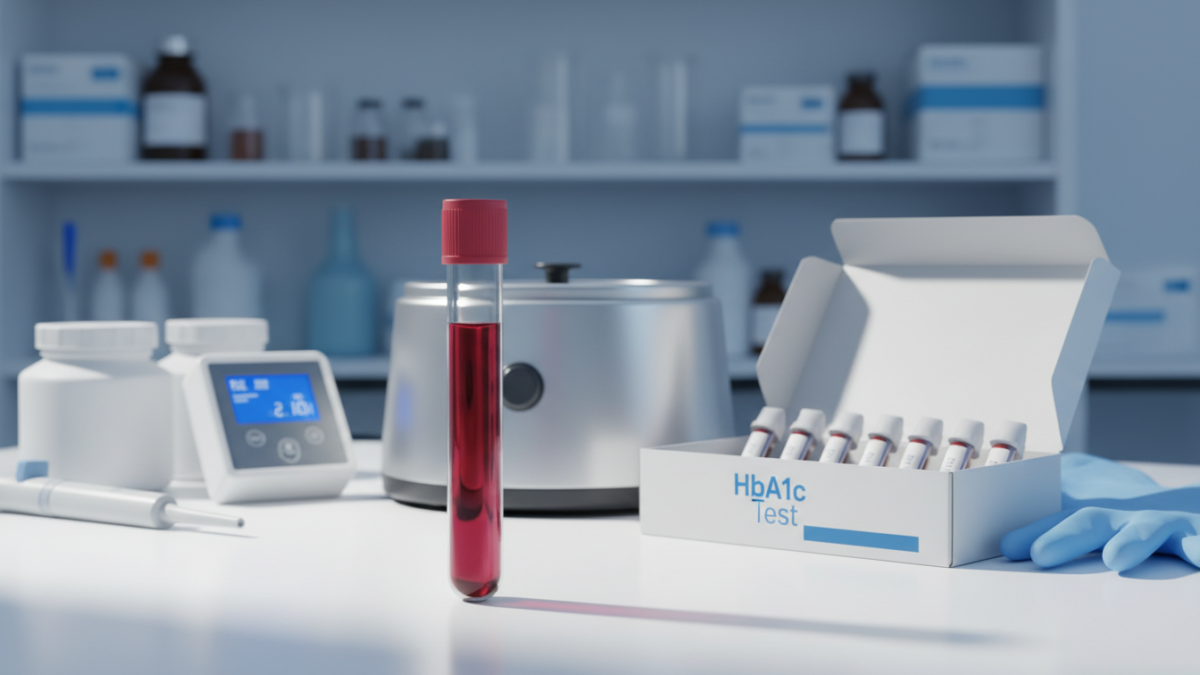
The hemoglobin A1c test is a key test in healthcare. It helps doctors check blood sugar levels over time. This test, also known as glycated hemoglobin, shows average blood sugar levels for the past two to three months.
Here’s how it works. Red blood cells carry hemoglobin, which carries oxygen. Glucose attaches to hemoglobin, a process called glycosylation. This shows your blood sugar levels over the past three months.
Explaining the HbA1c test to patients is easy. A healthcare provider takes a small blood sample. This sample is just a teaspoon and goes into a special tube. You don’t need to fast before the test, making it easy for everyone.
When a doctor orders this test, they use specific blood test codes. These codes help the lab do the right test and bill it correctly. They also give important details about the test and the patient.
The HbA1c result is a key marker for diabetes diagnosis and tracking. It helps millions of Americans make health choices every day.
Key Takeaways
- The HbA1c test measures average blood glucose levels over the previous two to three months by analyzing glycated hemoglobin on red blood cells.
- No fasting is required before the test, and the sample can be collected through a standard blood draw or a quick fingerstick.
- This diabetes blood test is used for diagnosis, screening, and ongoing monitoring of blood sugar management.
- Red blood cells have a lifespan of about three months, which is why the A1c provides a reliable long-term glucose reading.
- Abnormal results may prompt further evaluation, but they do not always signal a serious condition — multiple factors can influence the outcome.
- Specific blood test codes on requisition forms ensure laboratories run the correct analysis and insurers process claims accurately.
What the HbA1c Test Measures
The HbA1c test is simple. It checks how much glucose is attached to your red blood cells’ hemoglobin proteins. This test shows your blood sugar control over two to three months, not just a moment.
Definition of HbA1c
HbA1c is short for glycated hemoglobin. It’s the protein in red blood cells that carries oxygen. When your blood sugar sticks to this protein, it forms a compound that lasts for 90 to 120 days. The more sugar in your blood, the more hemoglobin gets coated.
How Glycosylation Works
The glycosylation process is a natural reaction. Glucose in your blood binds to a part of hemoglobin. This creates a stable bond. This bond happens all the time your blood has glucose.
Average Blood Glucose Levels
Red blood cells live about three months. So, the HbA1c test shows your average blood sugar over that time. Results are given as a percentage or as estimated average glucose (eAG) in mg/dL. The American Diabetes Association explains how these two are related:
| HbA1c (%) | Estimated Average Glucose (mg/dL) | Estimated Average Glucose (mmol/L) |
|---|---|---|
| 6% | 126 | 7.0 |
| 7% | 154 | 8.6 |
| 8% | 183 | 10.2 |
| 9% | 212 | 11.8 |
| 10% | 240 | 13.4 |
This method is reliable for checking if your treatment is working. It’s discussed further in the next sections on using the test for diagnosis and managing diabetes.
Why the HbA1c Test is Ordered
Doctors order the HbA1c test for important reasons. It shows more than just a blood sugar reading. This test gives a two-to-three-month snapshot of glucose levels. It’s a key tool in healthcare.
The Centers for Disease Control (CDC) suggests A1c testing for adults over 45. Younger adults with certain risk factors also need it.
Diagnostic Purposes
The HbA1c test is key in diagnosing diabetes. It can spot type 2 diabetes and prediabetes without fasting. The CDC lists risk factors for early screening:
- Overweight or obesity
- Family history of type 2 diabetes
- High blood pressure or high cholesterol
- History of heart disease
- Physical inactivity (less than 3 times per week)
- History of gestational diabetes
- Polycystic ovarian syndrome (PCOS)
Monitoring Diabetes Management
For those with diabetes, monitoring is vital. The American Diabetes Association (ADA) suggests testing at least twice per year for stable patients. Those adjusting therapy or not meeting goals should be tested every three months.
Assessing Risk of Complications
The Diabetes Control and Complications Trial (DCCT) found HbA1c is a dominant predictor of diabetic retinopathy. Keeping HbA1c at or below 7% greatly reduces microvascular complications in type 1 diabetes patients.
| Complication | Risk Reduction (HbA1c ≤ 7%) |
|---|---|
| Retinopathy | Up to 76% |
| Nephropathy | Up to 50% |
| Neuropathy | Up to 60% |
Knowing normal reference ranges is important. It helps patients and providers understand the numbers better.
Normal Reference Range
Understanding HbA1c levels starts with knowing what numbers are healthy. For adults without diabetes, the normal range is below 5.7%. If results are between 5.7% and 6.4%, a doctor might say you have prediabetes. A reading of 6.5% or higher, confirmed by a second test, means you have diabetes.
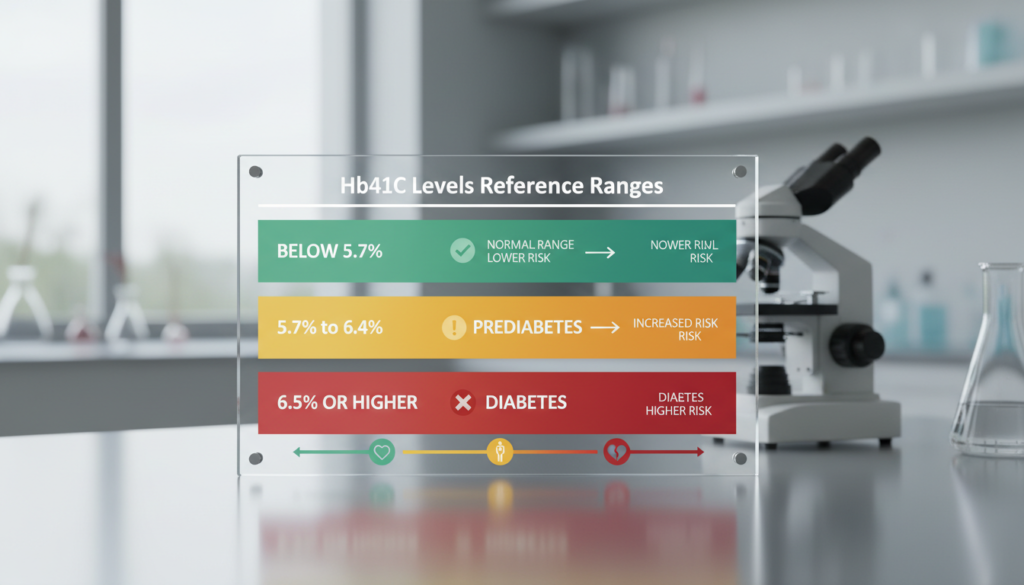
The American Diabetes Association suggests aiming for less than 7% for most adults with diabetes. Goals can change based on age, health, and risk of complications.
Typical Units of Measurement
In the United States, HbA1c values are measured as a percentage. This follows the National Glycohemoglobin Standardization Program (NGSP). The International Federation of Clinical Chemistry (IFCC) reports values in mmol/mol. IFCC values are about 1.5–2% lower than NGSP.
| Category | NGSP (%) | IFCC (mmol/mol) |
|---|---|---|
| Normal | Below 5.7% | Below 39 |
| Prediabetes | 5.7% – 6.4% | 39 – 46 |
| Diabetes | 6.5% or higher | 48 or higher |
| Typical Diabetes Target | Below 7% | Below 53 |
Age- and Population-Specific Variations
Reference values vary by age and health status. Pregnant women, children, and older adults have different targets. Elderly patients with many health issues might aim for up to 8% to avoid dangerous blood sugar drops.
Some groups face a higher risk of diabetes. The Centers for Disease Control and Prevention notes that African American, Hispanic/Latino, American Indian, Alaska Native, Pacific Islander, and Asian American communities are at higher risk. Doctors might start testing earlier for these groups.
Knowing your normal HbA1c range helps in making treatment plans and planning for the future. Blood disorders and other factors can affect results, as discussed later in this article.
What High Levels May Indicate
An HbA1c result of 6.5% or higher suggests diabetes mellitus. A second test or a different glucose test is often needed to confirm. High HbA1c levels mean blood sugar has been high for two to three months. Knowing the diabetes type helps find the right treatment.
Type 1 Diabetes
Type 1 diabetes happens when the immune system attacks insulin-making cells. This makes it hard for the body to control glucose. High HbA1c levels are a sign of this. Early detection is key to avoid serious problems like retinopathy, nephropathy, and neuropathy.
Type 2 Diabetes
Type 2 diabetes is when the body doesn’t make enough insulin or doesn’t use it well. It’s the most common type, affecting over 90% of people with diabetes in the U.S. High blood sugar in Type 2 diabetes can damage small blood vessels over time.
“For every 1% reduction in HbA1c, there is a 37% decrease in the risk of microvascular complications.” — UK Prospective Diabetes Study (UKPDS)
Other Conditions Linked to Elevated HbA1c
High HbA1c levels don’t always mean diabetes. Some conditions can make results seem higher:
- Iron deficiency anemia
- Vitamin B12 deficiency
- Chronic kidney disease
- Thalassemia trait
- Hypertriglyceridemia
| Condition | Effect on HbA1c | Mechanism |
|---|---|---|
| Iron deficiency anemia | Falsely elevated | Prolonged red blood cell lifespan |
| Chronic kidney disease | Falsely elevated | Carbamylated hemoglobin interference |
| Vitamin B12 deficiency | Falsely elevated | Altered red blood cell turnover |
Some medicines, like immunosuppressants and protease inhibitors, can also raise HbA1c levels. Different ethnic groups may have different levels of glycation, which can affect results. It’s important to consider these factors when looking at HbA1c levels.
What Low Levels May Indicate
Low HbA1c levels are just as important as high ones. They don’t always mean blood sugar is in check. Many health issues can lower the reading, hiding the real glucose levels. Knowing these reasons helps doctors and patients make better choices.
Hypoglycemia
Low blood sugar can lower the average over three months. Signs include shaking, confusion, sweating, and a fast heartbeat. People taking insulin or certain pills are at higher risk.
If low HbA1c levels show up with these signs, the treatment might need a change. This is to avoid dangerous drops in blood sugar.
Possible Hemoglobinopathies
Some hemoglobin disorders can affect the test’s accuracy. Conditions like sickle cell disease and hemoglobin C trait shorten red blood cells’ life. This means less glucose attaches to hemoglobin, leading to falsely low readings.
The National Institute of Diabetes and Digestive and Kidney Diseases (NIDDK) suggests other ways to check blood sugar for people with these disorders.
Other Underlying Conditions
Many health issues can also lower HbA1c levels without showing true blood sugar control:
- Hemolytic anemia and chronic blood loss
- Recent blood transfusions or erythropoietin therapy
- Liver cirrhosis and chronic kidney disease
- Iron supplementation and high-dose vitamin C intake
- Pregnancy-related blood volume changes
- Chronic alcohol use
These factors change how red blood cells work or affect the test itself. When signs of hypoglycemia or hemoglobin disorders show up, doctors might use fructosamine testing or continuous glucose monitoring. This is to get a clearer picture, as we’ll see in the next section.
Related Biomarkers
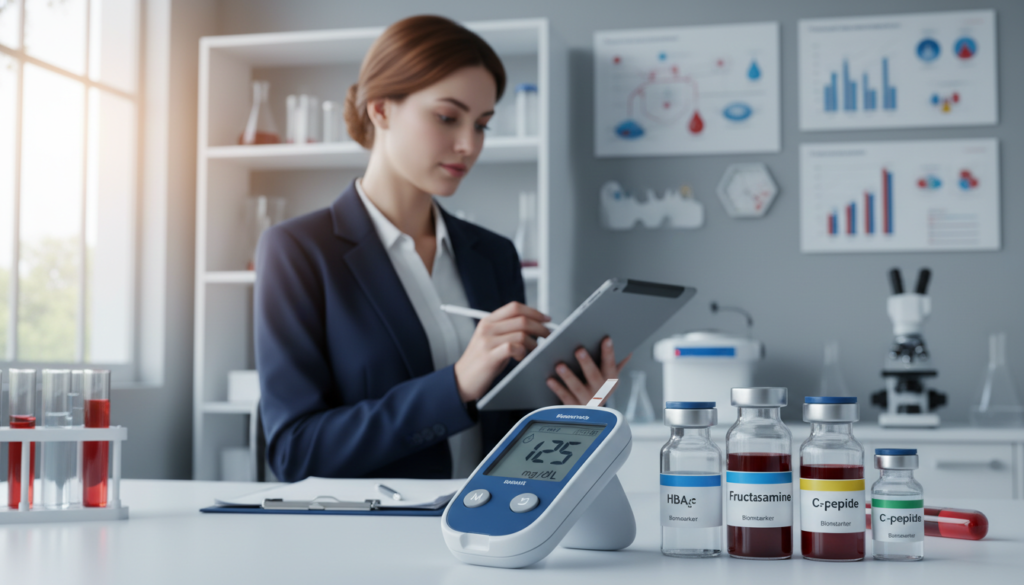
The HbA1c test is a key tool, but it’s even better with other tests. Doctors use many tests to understand how well the body handles sugar. Each test shows a different view of sugar handling.
Fasting Glucose Levels
A fasting blood glucose test checks sugar levels after an 8-hour fast. It shows what sugar levels are right now, not over time. The American Diabetes Association says a fasting level of 126 mg/dL or higher on two tests means diabetes. This test is a common choice for screenings in the U.S.
Oral Glucose Tolerance Test
The oral glucose tolerance test (OGTT) checks how well the body uses sugar. A patient drinks a sugar solution, and blood is taken two hours later. If the level is 200 mg/dL or higher, it might mean diabetes. The OGTT is great for finding gestational diabetes and early insulin resistance.
Fructosamine Testing
Fructosamine testing looks at glycated proteins in the blood. It shows average sugar levels over 2 to 3 weeks. It’s useful when the HbA1c test isn’t reliable, like in patients with certain blood types or recent blood loss.
| Test | Timeframe Measured | Key Use |
|---|---|---|
| Fasting Glucose | Immediate (point-in-time) | Routine screening |
| OGTT | 2-hour response | Gestational diabetes, early detection |
| Fructosamine | 2–3 weeks | Short-term monitoring |
| HbA1c | 2–3 months | Long-term glucose control |
For accurate results, labs need to be NGSP-certified. This ensures results are the same everywhere. Doctors use these tests together to make sure of the diagnosis and plan the best treatment.
Factors That Affect Results
Many things can make HbA1c test results less accurate. Knowing what affects these results helps doctors make better choices. This includes genetic differences and diseases that change how long red blood cells last.
Hemoglobin Variants
Hemoglobin variants like HbS and HbC can mess with lab tests. People with sickle cell trait or thalassemia might get wrong readings. High-performance liquid chromatography (HPLC) helps by removing things that can mess with results.
But, some tests might not catch all variants. It’s key for labs to pick the right test for each patient.
Anemia and Blood Disorders
Anemia can make HbA1c levels seem higher because red blood cells last longer. On the other hand, hemolytic anemia can make them seem lower. Blood transfusions can also affect results for months.
Diseases like kidney failure and liver disease can also change how accurate HbA1c tests are.
Variability in Patient Population
Some medicines, like opioids and HIV drugs, can change test results. Different labs might get slightly different results, which is why standardizing tests is so important.
| Factor | Effect on HbA1c | Recommended Action |
|---|---|---|
| Iron Deficiency Anemia | Falsely elevated | Confirm with fasting glucose |
| Hemolytic Anemia | Falsely decreased | Use fructosamine testing |
| HbS/HbC Variants | Variable interference | Select variant-compatible assay |
| Recent Blood Transfusion | Unreliable for 3–4 months | Delay testing or use alternatives |
| Chronic Kidney Disease | Altered red blood cell turnover | Supplement with continuous glucose monitoring |
Knowing about these factors helps doctors understand the limits of HbA1c tests. The next section will talk about how important patient history and other health conditions are in making decisions.
Clinical Context Considerations
Understanding HbA1c results is more than just a number. Doctors need to look at the whole picture of a patient’s health. This helps spot real changes in blood sugar levels and ignore misleading ones.
Patient History Evaluation
Getting a patient’s history right is key. Doctors check for signs like:
- Excessive thirst and frequent urination
- Unexplained weight loss or increased hunger
- Blurred vision and chronic fatigue
- Numbness or tingling in the extremities
- Slow-healing wounds and recurrent infections
It’s also important to review all medications. Some, like corticosteroids, can make blood sugar levels seem higher than they are.
Co-Morbid Conditions
Other health issues can affect blood sugar levels. Conditions like heart disease, kidney disease, and liver problems can change how the body handles glucose. This means doctors need to adjust how they read HbA1c levels to avoid treating patients too much or too little.
| Co-Morbid Condition | Effect on HbA1c | Recommended Action |
|---|---|---|
| Chronic Kidney Disease | May falsely lower or raise values | Use fructosamine or continuous glucose monitoring |
| Cardiovascular Disease | Aggressive targets may increase risk | Set individualized HbA1c goals per ADA guidelines |
| Liver Dysfunction | Altered red blood cell turnover | Cross-reference with fasting glucose tests |
Treatment Response Assessment
Looking at HbA1c levels over time is a good way to see if treatment is working. The Epidemiology of Diabetes Interventions and Complications (EDIC) study showed that keeping blood sugar in check can lower heart disease risk. By tracking HbA1c levels, doctors can adjust treatments and set goals that fit each patient’s needs.
Limitations of the HbA1c Test
The HbA1c test helps track glucose levels over time. Yet, no test is perfect. Several limitations can affect its accuracy, leading to incorrect decisions. It’s important for both patients and doctors to understand these gaps when making diagnoses.
Potential for Misinterpretation
Devices used for quick tests might show values 0.5% lower than lab tests. Blood from capillaries is less reliable than blood from veins. The American Diabetes Association (ADA) suggests using venous blood for diagnosis.
Labs must follow strict quality control. They need to keep their results consistent within and between labs. CLIA rules require quality checks every 24 hours.
Population-Specific Considerations
People from different ethnic groups may have different HbA1c levels. African American, Hispanic, and Asian populations might have higher levels at the same average glucose than white people. This could lead to overdiagnosis in some groups.
The HbA1c test is not the best for diagnosing gestational diabetes or type 1 diabetes. Doctors need to consider these when making diagnoses.
Impact of Medical Conditions
Some medical conditions can make HbA1c results less accurate. Blood-related disorders are among the biggest concerns:
- Recent blood transfusions can change HbA1c readings
- Active bleeding can lower results
- Hemoglobinopathies like sickle cell trait can affect test results
The ADA advises using plasma glucose tests to confirm HbA1c results when there are suspected interfering conditions.
Continuous glucose monitoring (CGM) is becoming a valuable tool. It helps by showing real-time glucose patterns, where HbA1c tests fall short.
| Interfering Factor | Effect on HbA1c | Recommended Action |
|---|---|---|
| Recent transfusion | Falsely lowered | Use fasting plasma glucose |
| Iron deficiency anemia | Falsely elevated | Confirm with fructosamine test |
| Sickle cell trait | Unreliable reading | Use boronate affinity assay |
| Chronic kidney disease | Falsely lowered or elevated | Cross-reference with CGM data |
References
This article uses trusted medical sources and peer-reviewed studies. These sources help doctors in the U.S. follow guidelines for the HbA1c test in diabetes care.
Medical Literature and Guidelines
The American Diabetes Association updates its care standards yearly. These standards include glycemic targets, testing schedules, and screening rules. The Centers for Disease Control and Prevention sets diabetes diagnosis levels and risk factors.
The National Institute of Diabetes and Digestive and Kidney Diseases offers detailed testing guides for both patients and doctors.
Research Articles
The Diabetes Control and Complications Trial is a key study. It shows how HbA1c levels affect diabetes complications over time. Clinical Chemistry publishes updates on HbA1c testing methods.
StatPearls and the NCBI Bookshelf provide in-depth reviews on diabetes pathophysiology. These are essential for students and professionals.
Clinical Practice Recommendations
The National Glycohemoglobin Standardization Program ensures lab results are consistent. The International Federation of Clinical Chemistry sets global testing standards. The College of American Pathologists runs testing programs for labs.
Leading clinics like Mayo Clinic and Cleveland Clinic share guidelines for HbA1c testing in diabetes care.