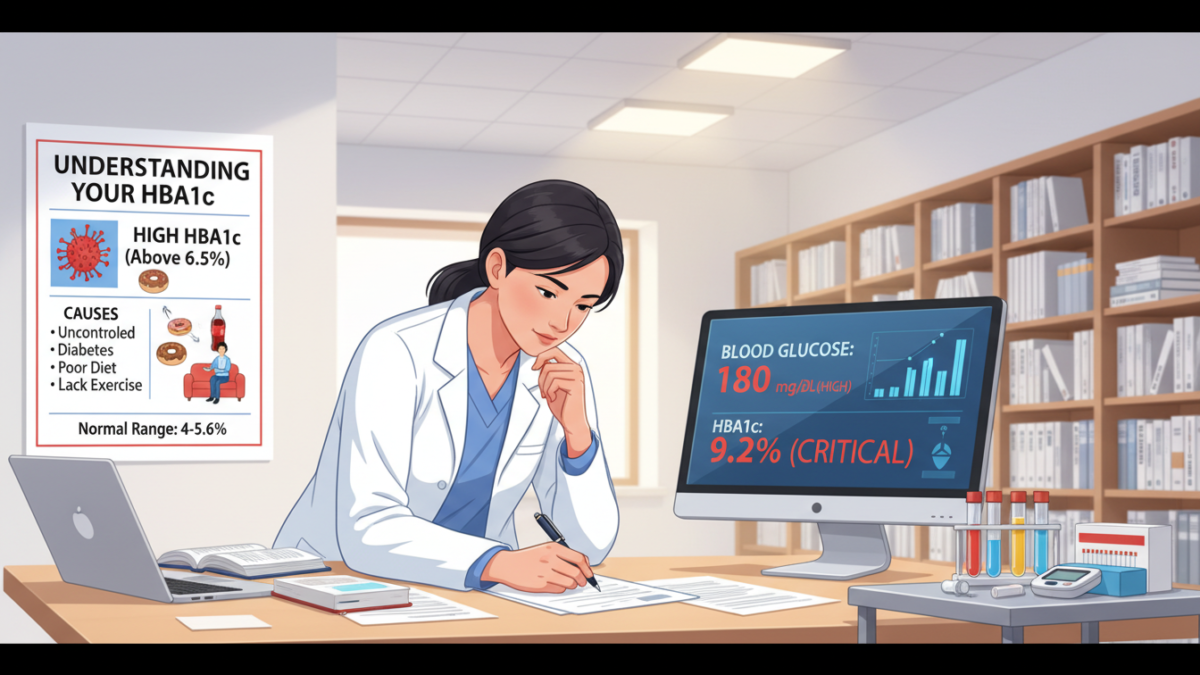
The HbA1c test is a key tool in checking blood sugar levels over time. It’s also known as hemoglobin A1c, glycated hemoglobin, or glycosylated hemoglobin. This simple blood test shows how well the body has controlled glucose over the past two to three months.
Red blood cells play a role in understanding HbA1c levels. Glucose naturally sticks to the hemoglobin in these cells. Because red blood cells last about 90 days, the HbA1c test reflects blood sugar levels over that time. A higher HbA1c means more glucose has attached to hemoglobin over time.
Interpreting glycated hemoglobin tests is vital for diagnosing diabetes and tracking treatment. Unlike a single fasting blood sugar test, HbA1c shows the bigger picture. It’s not affected by what you ate the night before or short-term blood sugar spikes.
Understanding HbA1c levels helps both patients and doctors make better choices. This article will explain what the test measures, why it’s ordered, and what different values mean. It will also discuss factors that can affect the results.
Key Takeaways
- HbA1c measures the percentage of hemoglobin with glucose attached, reflecting average blood sugar over two to three months.
- Red blood cells live about 90 days, which is why the test captures a reliable long-term snapshot of glucose control.
- The test is used for both diagnosing diabetes and monitoring ongoing treatment effectiveness.
- A higher HbA1c percentage signals that more glucose has been consistently present in the bloodstream.
- Single-point glucose readings can fluctuate daily, but HbA1c provides a stable, time-averaged measurement.
- Certain medical conditions and hemoglobin variants can affect the accuracy of HbA1c results.
What the Test Measures
The HbA1c test shows your average blood sugar levels over two to three months. It’s key to understanding diabetes care. It checks a protein in red blood cells called hemoglobin.
Overview of HbA1c
HbA1c stands for glycated hemoglobin. It shows how much glucose is attached to hemoglobin. High levels mean your blood sugar has been high for a long time.
This can lead to nerve damage and heart disease. Red blood cells live about 120 days. So, the test shows your blood sugar average over time.
The American Diabetes Association suggests testing HbA1c twice a year for stable patients. Those changing treatments should test every three months.
Mechanism of Glycation
Glycation is a natural process. Glucose binds to hemoglobin in the blood. The more glucose, the more hemoglobin gets glycated.
Labs use an enzyme called endoproteinase Glu-C to break down hemoglobin. They then measure a short segment to find out how much glucose is attached.
| Component | Role in the Test |
|---|---|
| Hemoglobin | Oxygen-carrying protein that binds glucose |
| Glucose | Sugar molecule that attaches to hemoglobin over time |
| Endoproteinase Glu-C | Enzyme used to isolate the glycated hexapeptide |
| N-terminal Hexapeptide | Fragment measured to determine glycation percentage |
This method is why doctors rely on HbA1c results. They help decide treatment plans based on your blood sugar control.
Why It Is Ordered
Doctors order the HbA1c test for two main reasons. They use it to screen for diabetes and to track blood sugar control over time. Knowing the HbA1c screening guidelines helps decide when and how often to test.
Screening for Diabetes
The CDC suggests HbA1c testing for all adults aged 45 and older. For those under 45, it’s recommended when certain risk factors are present. These include:
- Being overweight or obese
- Family history of type 2 diabetes
- High blood pressure or high cholesterol
- History of heart disease or stroke
- Physical inactivity (exercise fewer than 3 times per week)
- History of gestational diabetes
- Polycystic ovarian syndrome
- African American, Hispanic/Latino, American Indian, Alaska Native, Pacific Islander, or Asian American ethnicity
High HbA1c levels can mean prediabetes or type 2 diabetes. Testing is repeated based on results and risk level.
Monitoring Glycemic Control
For those with diabetes, the American Diabetes Association suggests regular testing. The schedule depends on treatment stability and meeting glycemic targets.
| Patient Status | Recommended Testing Frequency | Reason |
|---|---|---|
| Stable, meeting treatment goals | Twice per year | Confirms ongoing glycemic control |
| Recent therapy changes | Every 3 months (quarterly) | Assesses treatment effectiveness |
| Not meeting glycemic targets | Every 3 months (quarterly) | Guides treatment adjustments |
High HbA1c levels during follow-ups help doctors adjust treatments. This ensures proper care for both new and ongoing cases.
Normal Reference Range
It’s key to know the normal HbA1c ranges to understand test results. These ranges help doctors spot healthy blood sugar levels, prediabetes, and diabetes. Knowing your numbers can help start early treatment and long-term care.

Units of Measurement
HbA1c results are shown in two main ways. In the U.S., the National Glycohemoglobin Standardization Program (NGSP) uses percentages. The International Federation of Clinical Chemistry (IFCC) shows values in millimoles per mole (mmol/mol), which is about 1.5% to 2% lower than NGSP.
For the best results, tests should be done at NGSP-certified labs. High HbA1c levels are clearer when compared to these standards:
| Category | NGSP (%) | IFCC (mmol/mol) |
|---|---|---|
| Normal | Below 5.7% | Below 39 |
| Prediabetes | 5.7% – 6.4% | 39 – 47 |
| Diabetes | 6.5% or higher | 48 or higher |
| Dangerous / High Risk | 9.0% or higher | 75 or higher |
“An HbA1c of 6.5% or greater, confirmed on repeat testing, meets the American Diabetes Association’s diagnostic criteria for diabetes.” — ADA Standards of Care, 2024
Variations by Population
Normal HbA1c ranges can change with age and ethnicity. Older adults might have slightly higher HbA1c levels, even with healthy fasting glucose. This is due to aging red blood cells and slower glucose use.
Ethnic differences also affect HbA1c levels. Studies in Diabetes Care show African American, Hispanic, and Asian American people might have higher glycation rates. Doctors need to consider these differences when looking at high HbA1c levels in different groups.
What High Levels May Indicate
An HbA1c reading of 6.5% or higher is a key sign of diabetes mellitus. Knowing the causes of high HbA1c levels is important for both patients and doctors. High readings mean blood sugar has been high for two to three months, which can lead to serious health issues.
Type 2 Diabetes
Type 2 diabetes is the main reason for high HbA1c levels. It happens when the body can’t use insulin well. This causes blood glucose to stay high, attaching to hemoglobin in red blood cells.
The Diabetes Control and Complications Trial (DCCT) found that keeping HbA1c below 7% can reduce complications by 35–76%. These complications include:
- Diabetic retinopathy (eye damage)
- Nephropathy (kidney disease)
- Neuropathy (nerve damage)
Research in the New England Journal of Medicine showed that the risk of complications increases with higher HbA1c levels.
Other Conditions and Risks
High HbA1c levels are not just a sign of diabetes. They are also linked to other dangerous conditions:
| Condition | Association with High HbA1c |
|---|---|
| Cardiovascular disease | Increased risk of heart attack and stroke |
| Hypertension | Often coexists with impaired glucose metabolism |
| Obesity | Contributes to insulin resistance and higher HbA1c |
| Retinopathy progression | Risk grows as mean HbA1c rises |
Even without diabetes, adults can have HbA1c levels at 6% or above. This is a sign of prediabetes and a need for closer monitoring. Catching elevated HbA1c levels early allows for lifestyle changes that may prevent full disease onset.
What Low Levels May Indicate
Low HbA1c levels are just as important as high ones. They don’t always mean your blood sugar is good. Often, they show a problem with how red blood cells work or how long they last.
Interpretation of Low HbA1c Levels
Understanding low HbA1c levels starts with knowing the test’s basics. HbA1c shows your blood sugar over 90 to 120 days. If red blood cells are made or destroyed too fast, it can give a low reading.
Some blood conditions, like sickle cell disease, can also affect readings. This is because some lab tests can’t tell these conditions apart from normal blood sugar levels.
Situations Leading to Low Values
Many things can cause HbA1c to be low:
- Hemolytic anemia — fast destruction of red blood cells
- Recent blood transfusion or big blood loss
- Using erythropoietin or iron to make more red blood cells
- Chronic kidney or liver disease
- Pregnancy, because of more blood and cells
- Drinking a lot of alcohol
- Living at high altitudes
Vitamin C can also change HbA1c readings. This is based on the test used, as seen in the Journal of Clinical Pathology.
Doctors should look at fasting glucose and patient history with HbA1c. This helps avoid mistakes from low or high readings.
It’s key to know about these factors before making conclusions. The next part talks about other tests like fasting glucose and the oral glucose tolerance test. They help when HbA1c doesn’t give a clear picture.
Related Biomarkers
An HbA1c high levels explanation often needs support from other blood tests. Doctors don’t just use one test for diabetes diagnosis or management. They use several tests to understand how your body handles sugar over time.
Fasting Glucose
A fasting blood glucose test checks your blood sugar after not eating for at least eight hours. It shows a single-moment snapshot of your glucose level, usually in the morning. The American Diabetes Association says a fasting glucose of 126 mg/dL or higher on two separate occasions means diabetes.
If HbA1c results are high, a fasting glucose test is often next. This confirms if your blood sugar is high at baseline.
Oral Glucose Tolerance Test
The oral glucose tolerance test (OGTT) checks how your body reacts to a sugary drink with 75 grams of glucose. Blood samples are taken at fasting and two hours later. A two-hour reading of 200 mg/dL or above confirms diabetes.
Providers may use other biomarkers for a short-term view:
- Fructosamine test — reflects average blood sugar over two to three weeks using glycated proteins
- Continuous glucose monitoring (CGM) — tracks 24-hour glucose data and calculates time-in-range
- Estimated average glucose (eAG) — converts HbA1c percentages into an everyday mg/dL number
| Test | What It Measures | Timeframe | Diabetes Threshold |
|---|---|---|---|
| HbA1c | Glycated hemoglobin | 2–3 months | ≥ 6.5% |
| Fasting Glucose | Blood sugar after fasting | Single moment | ≥ 126 mg/dL |
| OGTT (2-hour) | Glucose response after load | 2 hours | ≥ 200 mg/dL |
| Fructosamine | Glycated serum proteins | 2–3 weeks | Varies by lab |
Using multiple tests together gives clinicians the confidence needed before starting treatment or adjusting a care plan. This layered approach ties directly into how external factors — discussed next — can shift your results.
Factors That Affect Results
Not every high or low HbA1c reading tells the full story. Many biological and external factors can change test results. This makes it harder to understand what the numbers mean. Knowing these factors helps doctors get a clearer picture of health risks.
Hemoglobin Variants
Some genetic hemoglobin variants can mess with HbA1c tests. These include HbS, HbC, HbF, and HbA2. People from Africa, the Mediterranean, and Southeast Asia are more likely to have these. The test results can be falsely high or falsely low depending on the lab.
“Clinicians should consider hemoglobin variant screening in populations where discordance between HbA1c and glucose monitoring is observed.” — American Diabetes Association, Standards of Care in Diabetes, 2024
External Influences
Many non-genetic factors can also affect HbA1c results. Nutrient deficiencies are a big one. A study in the Journal of Clinical Endocrinology & Metabolism found iron deficiency can make HbA1c seem higher, mostly in women. Lack of vitamin B12 and folate can do the same by changing how red blood cells break down.
Medical conditions and medicines also play a part. Here are a few examples:
- Hypothyroidism — slows down red blood cell breakdown, making HbA1c seem higher
- Chronic kidney disease — creates carbamylated hemoglobin that messes with the test
- Antiretroviral drugs, dapsone, and high-dose aspirin — change hemoglobin chemistry
- Hypertriglyceridemia and organ transplant immunosuppressants — can make values seem higher
Because of all these factors, doctors often use HbA1c with other tests. This includes fasting glucose and oral glucose tolerance testing. Together, they give a full view of a patient’s health risks.
Clinical Context Considerations
Understanding HbA1c levels is more than just looking at a number. Doctors must consider many factors before making a diagnosis or treatment plan. This includes the patient’s background, symptoms, and demographic details.
Patient History and Risk Factors
Some symptoms are clear signs that a patient needs an HbA1c test. These symptoms include:
- Excessive thirst and frequent urination
- Unintended weight loss or extreme hunger
- Blurred vision
- Numbness or tingling in hands and feet
- Fatigue and dry skin
- Slow-healing sores or frequent infections
If a patient has several of these symptoms, they should be checked right away. Family history of diabetes, obesity, and a sedentary lifestyle also raise concerns before any lab work is done.
Age and Population Factors
A study in Diabetes Care found that HbA1c levels increase with age, even in people without diabetes. This is due to natural changes in how the body handles sugar. Doctors need to consider this when checking HbA1c levels in older adults to avoid misdiagnosis.
Ethnicity also affects diabetes risk. The American Diabetes Association has identified certain groups at higher risk:
| Population Group | Relative Diabetes Risk | Known Glycation Variation |
|---|---|---|
| African Americans | Higher | HbA1c may read 0.4% higher at the same glucose level |
| Hispanic Americans | Higher | Mild elevation observed in studies |
| American Indians and Alaska Natives | Higher | Glycation differences documented |
| Asian Americans | Higher | Risk increases at lower BMI thresholds |
| Pacific Islanders | Higher | Elevated glycation rates reported |
Research shows that sex does not significantly affect HbA1c values. This means sex is not a major factor in interpreting HbA1c results. These findings help doctors provide more accurate and personalized care, a topic closely related to the broader limitations of the test.
Limitations of the Test
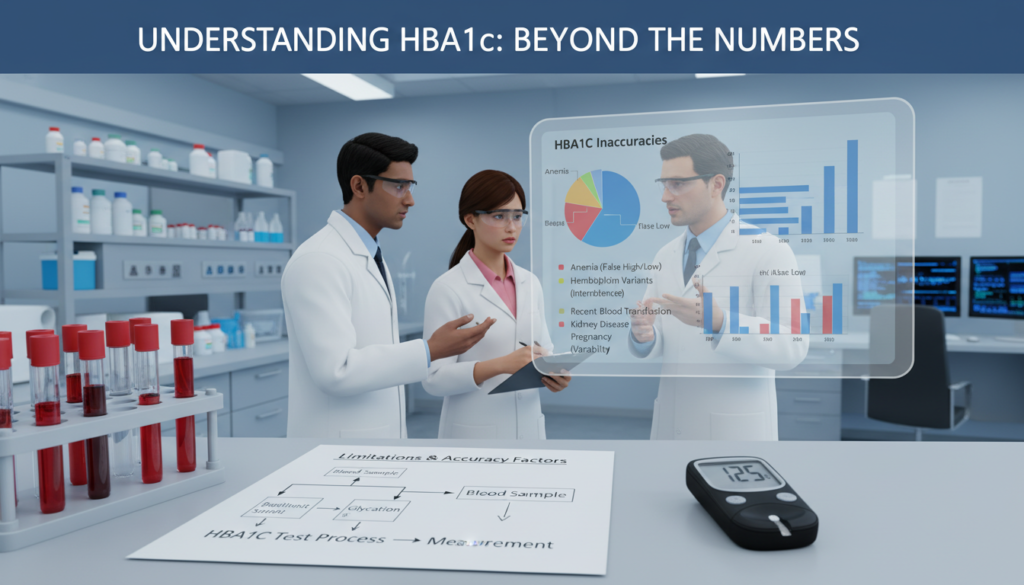
Understanding HbA1c high levels meaning requires knowing what can skew results. No lab test is perfect. The HbA1c assay has specific test limitations that clinicians and patients should recognize before making treatment decisions.
Situations Affecting Test Accuracy
Several medical conditions change how long red blood cells survive. This directly distorts HbA1c readings. Conditions that shorten red blood cell lifespan — such as sickle cell anemia, thalassemia, and hemolytic anemia — tend to produce falsely low values. Blood transfusions introduce donor cells with different glycation levels, muddying the picture.
Kidney failure and chronic liver disease create unique complications. Anemia and malnutrition tied to kidney disease reduce the test’s reliability. Spleen disorders, including asplenia or prior splenectomy, extend red blood cell survival and may push results artificially higher.
- Hemoglobinopathies alter hemoglobin structure and cell turnover rates
- Iron-deficiency anemia can falsely elevate HbA1c
- Recent blood loss or transfusion makes results unreliable
General Limitations of HbA1c
The test is not recommended for diagnosing gestational diabetes or type 1 diabetes. These conditions require other methods like fasting glucose or oral glucose tolerance testing, as discussed in the related biomarkers section.
Point-of-care (POC) devices carry notable test limitations. They typically yield values about 0.5% lower than standard laboratory assays. Capillary POC results require venous sample confirmation before any formal diagnosis. According to the National Glycohemoglobin Standardization Program, intralaboratory variation should stay below 2%, while interlaboratory variability should not exceed 3.5%.
| Measurement Type | Expected Variation | Confirmation Needed |
|---|---|---|
| Laboratory Venous Assay | CV below 2% (intralaboratory) | No |
| Point-of-Care Capillary | ~0.5% lower than lab values | Yes — venous confirmation required |
| Interlaboratory Comparison | CV up to 3.5% | Standardization program oversight |
Grasping the full HbA1c high levels meaning demands awareness of these pitfalls. Your clinician will weigh patient history, risk factors, and these test limitations to reach an accurate interpretation.
Summary of HbA1c Test Significance
The HbA1c test is key in today’s healthcare. It shows blood sugar levels over three months. Knowing about high HbA1c levels helps both patients and doctors make better treatment plans and lifestyle changes.
Importance in Diabetes Management
The DCCT/EDIC studies showed that lower HbA1c values reduce heart risks and improve health over time. This makes the HbA1c test the top choice for managing diabetes.
Doctors rely on this test for several reasons:
- No fasting is needed before the blood draw
- Samples can be taken at any time of day
- It gives a long-term picture instead of a single moment
- It helps with both screening and ongoing monitoring
Contextual Use in Clinical Settings
Labs use several methods to measure HbA1c. Each method has its own benefits for healthcare work.
| Method | Technique | Sample Type |
|---|---|---|
| HPLC | Cation-exchange chromatography | Venous (K2 EDTA lavender top tube) |
| Immunoassay | Monoclonal antibody detection | Venous (K2 EDTA lavender top tube) |
| Enzymatic Assay | Fructosyl peptide oxidase | Venous (K2 EDTA lavender top tube) |
| Point-of-Care (POC) | STAT analyzer | Capillary fingerstick |
The American Diabetes Association suggests HbA1c testing twice a year for those meeting goals. It should be done quarterly for those whose treatment has changed or who are not meeting goals.
High HbA1c levels mean more than just a number. Doctors must consider patient history, hemoglobin status, and other factors. In this context, the HbA1c test is a powerful tool for care and prevention.
References
This article uses well-known HbA1c clinical references in the United States. These include peer-reviewed research, national health guidelines, and testing protocols. They help doctors understand and use HbA1c results.
Medical Journals and Guidelines
The NCBI Bookshelf StatPearls database gives a detailed look at HbA1c testing in diabetes care. The Diabetes Control and Complications Trial linked A1c values to blood glucose levels. The American Diabetes Association updates guidelines on testing frequency based on blood sugar control.
The Centers for Disease Control and Prevention offers screening recommendations. These guide doctors in testing patients nationwide.
Clinical Laboratory Guidelines
Accurate HbA1c testing follows strict guidelines from several organizations. The National Glycohemoglobin Standardization Program sets a standard for measuring assays. The International Federation of Clinical Chemistry and Laboratory Medicine uses methods like electrospray ionization mass spectrometry and capillary electrophoresis.
The Clinical Laboratory Improvement Amendments require labs to run quality control levels every 24 hours. The College of American Pathologists runs an external quality assurance program. This program ensures test results are accurate.
These HbA1c clinical references and guidelines are key to reliable diabetes testing. Following these standards ensures that patients and doctors can trust test results for making informed decisions.